


Views: 0 Author: Site Editor Publish Time: 2025-10-17 Origin: Site
In the world of water pumping systems, self-priming jet pumps are one of the most reliable and versatile devices. Whether you're working in domestic, agricultural, or industrial settings, a self-priming jet pump offers a solution for moving water from one place to another with ease. But what exactly is a self-priming jet pump, and why is it so highly regarded in various applications?
In this article, we’ll explore the construction, working principles, uses, benefits, and maintenance of self-priming jet pumps. By the end, you'll have a thorough understanding of how these pumps operate and how they can serve your needs efficiently.
A self-priming jet pump is a type of centrifugal pump that has the ability to prime itself without needing external assistance. Priming refers to the process of filling the pump casing with water before it can start pumping efficiently. While most pumps require manual priming (the act of filling the pump with water), a self-priming pump can do this automatically by using the fluid being pumped to create a vacuum that expels air, thus allowing water to be drawn into the pump and start the pumping process.
The jet pump's self-priming feature is what makes it especially useful in situations where water sources are located at a lower level than the pump or when the pump needs to be installed away from the water source, such as in deep wells, ponds, or storage tanks.
To understand how a self-priming jet pump works, let’s break down the fundamental mechanism:
The self-priming jet pump consists of a motor-driven impeller and a jet assembly that creates a suction force. The motor spins the impeller, which draws water into the pump casing. When the pump is turned on, the impeller spins rapidly, creating a low-pressure zone within the pump casing. This causes water to be drawn in through the intake valve.
However, at the same time, there is also air trapped within the pump casing, especially when the pump is newly installed or when there is air in the water supply. The jet assembly, which typically includes a nozzle and venturi tube, creates a high-velocity water jet that helps remove the air trapped in the system. The rapid flow of water creates a vacuum that displaces the air and draws in water from the source. This process is known as self-priming.
Once the water is flowing into the pump and the air has been cleared, the pump becomes fully primed and is able to pump water continuously without any need for manual intervention.
The pump casing plays a critical role in the self-priming function. Initially, it holds both air and water. As the impeller creates a suction, the air is expelled, and the water fills the casing, allowing the pump to work at full efficiency.
The primary advantage of a self-priming jet pump is its ability to automatically purge air from the system. Once the system has successfully primed, the pump will continue to operate without the need to refill the pump casing with water manually. This feature is particularly helpful for applications where the water source fluctuates or where access to the water source is limited.
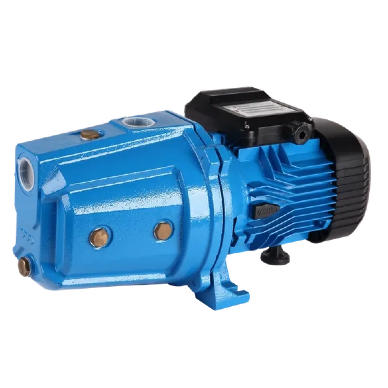
A self-priming jet pump consists of several key components that work together to ensure the pump operates effectively:
The pump casing is where water is drawn in and where the water-air mixture is expelled. It needs to be durable and able to withstand the pressures and forces created during operation.
The impeller is a rotating component that moves the water through the pump. It’s powered by the motor and is designed to create the suction force necessary to draw water in and expel air.
The jet assembly, made up of the nozzle and venturi tube, is responsible for creating the water jet that aids in self-priming by removing trapped air from the system.
The motor drives the impeller and provides the power needed to pump water. It can be electric or gasoline-powered, depending on the application.
A check valve is often installed in the suction line to prevent water from flowing back into the source when the pump is turned off. This is essential for maintaining priming and ensuring that the pump doesn’t lose its suction.
Self-priming jet pumps are widely used across a variety of industries, particularly in situations where the water source is below the level of the pump, or where the pump must draw water from a distant location.
In residential applications, self-priming jet pumps are often used to draw water from shallow wells, cisterns, or ponds and distribute it throughout the household. These pumps are ideal for homes in rural or remote areas where access to municipal water is limited.
Self-priming jet pumps are also commonly used in agricultural irrigation systems. These pumps can draw water from wells, reservoirs, or rivers and are essential for watering crops. Their self-priming ability makes them highly reliable for irrigation in areas where the water table fluctuates.
One of the most significant advantages of a self-priming jet pump is its ability to pump water from deep wells. Whether you're dealing with a well that’s 10 feet or 150 feet deep, a self-priming jet pump can draw water from below ground level with ease.
In commercial and industrial applications, self-priming jet pumps can be used to transfer water for cooling systems, boiler feed, or as part of industrial processes. They’re also used in the mining industry for dewatering applications.
Self-priming jet pumps are also employed for flood control or emergency water extraction. They are useful in situations where large volumes of water need to be pumped from flooded areas or temporary water removal applications.
The versatility and reliability of self-priming jet pumps make them an excellent choice for a wide variety of applications. Here are some of the key benefits of using these pumps:
Self-priming jet pumps are easy to set up and don’t require frequent maintenance, making them incredibly convenient. Since they don’t need manual priming, they save time and reduce the risk of errors during installation.
Compared to other types of pumps, self-priming jet pumps tend to be more affordable, making them an excellent choice for homeowners and small businesses. The reduced need for additional equipment or manual labor also helps save on overall costs.
Once primed, self-priming jet pumps can operate continuously, providing a reliable water supply for both residential and commercial use. This consistency is vital for applications where water is needed on a regular basis.
Self-priming jet pumps are designed to operate efficiently, reducing the need for excess power and minimizing energy consumption. This makes them a sustainable option for long-term use.
These pumps are versatile and can be used for various applications, such as irrigation, dewatering, emergency pumping, and industrial use. This makes them an excellent investment for businesses and homeowners alike.
Regular maintenance is crucial to ensuring that your self-priming jet pump continues to operate efficiently. Here are a few essential maintenance tips:
Inspect the suction pipe and connections regularly to ensure there are no air leaks, as this can compromise the pump’s self-priming ability.
Over time, debris can build up in the impeller, reducing its efficiency. Cleaning the impeller periodically will help maintain optimal performance.
Check the motor regularly for signs of wear or damage. Ensure that it’s properly lubricated and that the electrical connections are in good condition.
The check valve and strainer should be cleaned and inspected periodically to ensure that no blockages or damage are affecting the flow of water.
A self-priming jet pump is an invaluable tool for those who need to pump water from various sources efficiently and effectively. By understanding how these pumps work, their benefits, and how to maintain them, you can make an informed decision about whether a self-priming jet pump is the right choice for your needs.
Whether you're managing a household water supply, an irrigation system, or handling industrial water transfer, the self-priming jet pump's ability to operate without manual priming and provide reliable water flow makes it an indispensable tool for a wide variety of applications.


