


Views: 0 Author: Site Editor Publish Time: 2025-08-18 Origin: Site
When you wonder if an air pump or a water pump is better, the answer really depends on what you need at home. Air pumps move air, while water pumps move water—each has its own job. Many homeowners pick a pump for reasons like energy savings, quiet operation, or year-round comfort.
Reason People Choose Pumps | What It Means |
|---|---|
Energy efficiency | Save money on bills and use less energy |
Heating and cooling options | Enjoy comfort in every season |
Quiet and low maintenance | Less noise and fewer repairs |
Air pumps move air to provide heating, cooling, and ventilation, offering energy efficiency and quiet operation for home comfort.
Water pumps move water for supply, drainage, and pressure boosting, with various types suited for different household needs like wells, pools, and basements.
Choosing the right pump means matching its size, flow rate, and pressure to your home's water use and plumbing setup to save energy and avoid problems.
Booster water pumps improve low water pressure in multi-story homes or weak supply areas, enhancing comfort and appliance performance.
Regular maintenance keeps both air and water pumps running efficiently; air pumps need simpler care, while water pumps require more attention.

Air pumps use mechanical parts to move air from one place to another. You’ll find several types in homes, each with its own way of creating airflow. Here’s a quick look at how the most common air pumps work:
Air Pump Type | Mechanism Description | Common Residential Applications |
|---|---|---|
Diaphragm Air Pumps | A flexible diaphragm moves back and forth, changing chamber volume to draw in and push out air. | Aquarium aerators, medical ventilators |
Piston Air Pumps | A piston moves inside a cylinder, drawing air in on the intake stroke and compressing it on the outstroke. | Inflating tires, small compressors |
Rotary Vane Air Pumps | Rotating vanes inside a housing create air pockets that compress and push air out continuously. | HVAC systems, pneumatic tools |
Centrifugal Air Pumps | A spinning impeller accelerates air outward, converting velocity into pressure for steady airflow. | Ventilation, cooling systems |
Peristaltic Air Pumps | A rotating mechanism squeezes a flexible tube, pushing air in pulses without contamination. | Laboratory equipment, medical devices |
All these pumps create a pressure difference. This pressure moves air from a low-pressure inlet to a higher-pressure outlet. You’ll see this in action when you inflate a bike tire or run an aquarium bubbler.
You probably use air pumps more often than you think. The most frequent home use is in aerobic septic systems, especially with linear diaphragm air pumps. These pumps keep your septic system healthy by adding oxygen. You’ll also find air pumps in:
Aquarium aerators to keep fish healthy
Inflating tires, balls, and air mattresses
Small compressors for tools or cleaning
Ventilation and cooling systems
Tip: Place your air pump in a cool, shaded spot with good airflow. Heat can shorten the life of pump parts like diaphragms and gaskets.
Let’s break down the main advantages and disadvantages of air pumps in your home:
Advantages | Disadvantages |
|---|---|
High energy efficiency—save on utility bills | Lower efficiency in very cold weather |
Quiet operation—great for bedrooms and offices | Upfront installation costs can be high |
Dual function: heating in winter, cooling in summer | May need extra equipment for best results |
Environmentally friendly—reduces carbon footprint | Needs outdoor space for some models |
Flexible installation in new or old homes | Some setups require extra indoor space |
You get efficient, quiet comfort with an air pump, but you should consider the initial cost and space needs before you buy.
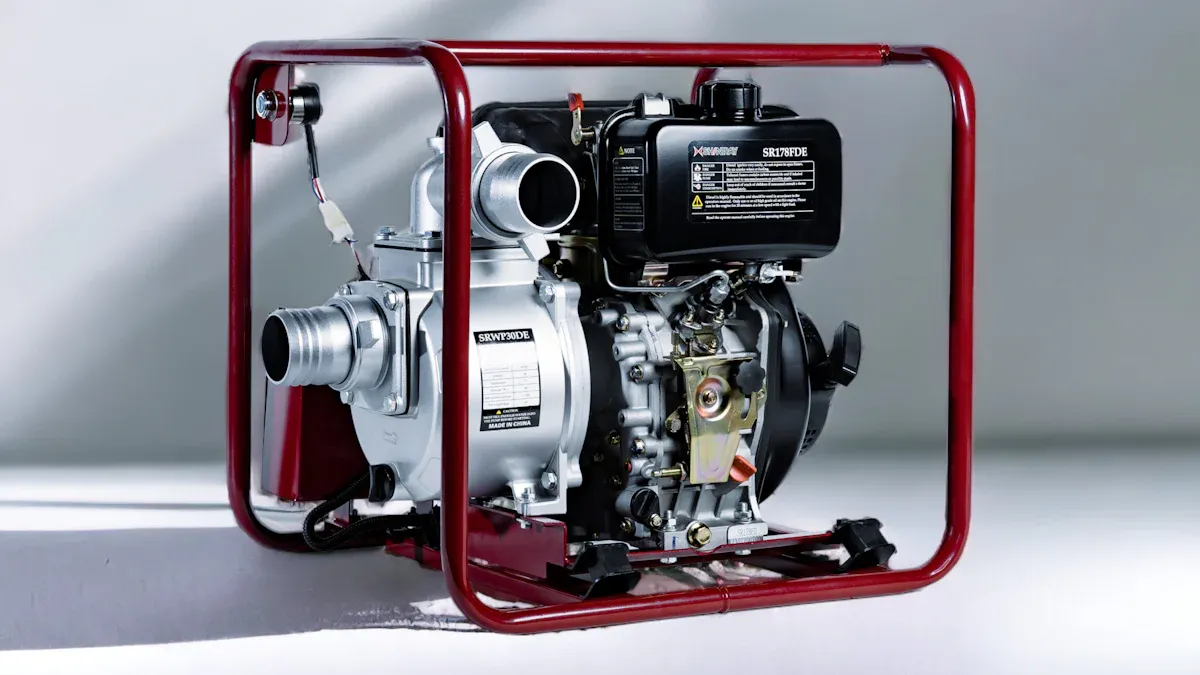
You use a water pump to move water from one place to another. Most pumps in homes run on electricity. When you turn on a faucet, the water pump senses a drop in pressure and starts working. It pushes water through your pipes until you turn off the tap. Some pumps use smart controls to adjust their speed. If you use a lot of water, the pump speeds up. If you use less, it slows down. This keeps your water pressure steady and saves energy.
Here’s how most water pumps operate:
The pump starts when water pressure drops, like when you open a tap.
It stops when you close the tap and water flow ends.
Some pumps use sensors and variable speed motors to match your water use.
Many pumps have safety features to prevent damage if water runs out.
A water pump works best at its “best efficiency point.” This means it gives you the most water with the least energy.
You find many types of water pumps in homes. Each type fits a different job. Here’s a quick guide:
Pump Type | Typical Uses | Best For |
|---|---|---|
Sump Pump | Removes water from basements | Flooded basements, heavy rain |
Utility Pump | Drains pools, water heaters, or flooded areas | Quick, temporary water removal |
Well Pump | Brings water from underground wells | Homes with private wells |
Pool Pump | Circulates and filters pool water | Swimming pools |
Water Booster Pump | Increases water pressure in your home | Multi-story homes, low pressure |
Demand Pump | Supplies water from tanks on demand | RVs, backup water systems |
Hot Water Recirculating Pump | Gives instant hot water at faucets | Homes wanting fast hot water |
You use a water pump for clean water, like drinking or bathing, and sometimes for dirty water, like draining a flooded basement. Some pumps, like a gas water pump, work well outdoors or when you lose power.
Tip: Always match the pump type to your water pump applications. Using the right pump keeps your system safe and efficient.
Let’s look at the main pros and cons of using a water pump at home:
�� Pros | �� Cons |
|---|---|
Reliable for long periods if you have city water | Needs professional installation, which can cost more |
Lower maintenance than battery-powered pumps | Not as powerful as some electric pumps during heavy flooding |
Saves space if mounted above the sump pit | Uses more municipal water, which can raise your bill |
Works well for domestic water supply and emergencies | Needs to be close to both water lines and sump pit |
You get steady water flow and less upkeep, but you might pay more for installation and water use.
A booster water pump helps when your home has low water pressure. You often need this type in multi-story houses or places with weak city water. The booster water pump uses special parts to increase pressure. It may have a pressure tank and a control panel to keep water pressure steady. Some models use several impellers to boost pressure even more.
You see booster water pumps in tall buildings, irrigation systems, and anywhere you need strong, steady water flow. They focus on raising pressure, while other pumps just move water. If you notice weak showers or slow-filling tubs, a booster water pump can solve the problem.
Choosing the right water pump for your home can feel overwhelming, but you can break it down into a few simple steps. You want a pump that matches your household’s needs, fits your plumbing, and runs efficiently. Let’s walk through the key factors you should consider.
Getting the right size is the most important step. If you pick a pump that’s too small, you won’t get enough water. If you go too big, you waste energy and money. Here’s how to properly size a water pump for your home:
Count Your Fixtures: Add up all the places you use water—showers, sinks, toilets, washing machines, outdoor spigots, and more.
Calculate Peak Demand: Think about the busiest time of day. Maybe everyone showers in the morning, or you run the dishwasher while watering the garden. Use the fixture count or peak demand method to estimate how much water you need at once.
Check Your Water Source: If you have a well, make sure the pump’s capacity does not exceed the well’s yield. For city water, focus on pressure and flow.
Account for Pressure Needs: You want at least 20 psi at the farthest or highest outlet in your home.
Factor in Friction Loss: Pipes, elbows, and valves slow down water. Add these losses to your calculations.
Tip: Always size your pump for peak demand, not average use. This way, you never run out of water when you need it most.
You need to calculate required flow rate and pressure to make sure your water pump delivers enough water everywhere in your house. Flow rate is measured in gallons per minute (GPM), and pressure is measured in pounds per square inch (PSI).
Pump Model | Typical Flow Rate (GPM) | Pressure (PSI) | Application Description |
|---|---|---|---|
10RPS05 Pump End | 11 - 18 | N/A | Busy homes with multiple showers; shallow to mid-depth wells |
1HP Eco-Steady Booster Pump | 15 - 25 | Up to 55 | Steady pressure for small homes, sprinklers, long pipe runs |
General Residential Range | 5 - 25 | Up to 55 | Varies by household size, fixtures, and irrigation needs |
Most homes need a flow rate between 5 and 25 GPM and pressure up to 55 PSI. If you have a large family or lots of appliances, you’ll want a higher flow rate. For smaller homes, a lower flow rate works fine.
Note: If you have a multi-story house or long pipe runs, you may need a booster water pump to maintain steady pressure.
Head lift is the total height your water pump must move water, plus the resistance from pipes and fittings. You need to add up:
Static Head: The vertical distance from the water source to the highest outlet.
Friction Loss: Resistance from pipes, elbows, and valves.
Pressure Head: The pressure you want at the outlet.
Add these together to get the total head. Your pump must meet or slightly exceed this number at your desired flow rate. If you undersize the pump, you’ll get weak flow. If you oversize it, you waste energy and shorten the pump’s life.
Tip: Choose a pump that operates near the center of its performance curve. This gives you the best efficiency and longest life.
The size of your pump’s inlet and outlet affects how well it moves water. Most residential pumps have inlets and outlets around 1 inch, but you should always match or slightly increase pipe size to reduce friction loss.
Use straight pipe runs before the pump inlet—about 10 times the diameter—to keep flow steady.
Avoid elbows and sharp turns near the pump.
On the discharge side, match or increase pipe size for better flow and less pressure drop.
If you use larger pipes, you get smoother flow and less strain on your water pump. This helps your system last longer and work more efficiently.
When you decide the pump size and type, keep these points in mind:
Pump Type: Submersible, jet, and centrifugal pumps each fit different needs.
Pump Environment: Outdoor pumps need protection from weather and freezing.
Water Properties: If your water has solids or is very hot, pick a pump built for those conditions.
Safety and Maintenance: Look for features like thermal overload protection and easy access for cleaning.
Energy Efficiency: Heat pump water heaters are the most energy-efficient option for residential use, saving up to 63% compared to standard electric heaters.
Durability and Compatibility: Make sure your pump and fittings match your plumbing materials (like PVC, copper, or PEX) and resist corrosion.
Callout: If you’re not sure which water pump fits your home, talk to a professional or a trusted supplier. They can help you match your needs to the right pump.
When you look at efficiency, both air pumps and water pumps can help you save energy, but they do it in different ways. Air-to-air heat pumps use less electricity than traditional heating systems. They work well for both heating and cooling your home. Air-to-water heat pumps take it a step further. They can heat your home and provide hot water at the same time, which means even more energy savings if you need both.
Aspect | Air-to-Air Heat Pumps | Air-to-Water Heat Pumps |
|---|---|---|
Energy Efficiency | Efficient; uses less electricity than traditional heating; good for heating and cooling | Highly efficient; can provide both heating and hot water simultaneously, leading to greater overall energy savings |
Installation Cost | Lower due to simpler setup | Higher due to water distribution system |
Running Cost | Moderate | Lower over time, offsetting higher initial cost |
Maintenance | Regular maintenance needed; simpler tasks | Regular maintenance needed; more complex due to water system |
Climate Suitability | Works well in moderate climates; less effective in extreme cold | Also suited for moderate climates; efficiency can drop in extreme cold due to freezing risk |
Building Suitability | Best for well-insulated homes; simpler installation | Best for homes with hydronic heating infrastructure; sensitive to building design |
Heat pump water heaters work by moving heat instead of making it. This makes them two to three times more energy efficient than regular electric water heaters. If you want to lower your energy bills, this is a big advantage.
You probably wonder how much you’ll spend to install and run these systems. Air-source heat pumps usually cost less to install than geothermal systems. The price depends on the size of your home and the complexity of the system. Here’s a quick look at typical costs:
Heat Pump Type | Usage | Equipment Cost Range | Installed Cost Range |
|---|---|---|---|
Mini-split (air-source) | Single room/area | $1,000 - $3,500 | $1,500 - $5,000 |
Central (air-source) | Whole home | $2,000 - $5,500 | $8,000 - $15,000 |
Geothermal | Small/medium home | $4,000 - $8,000 | $12,000 - $25,000 |
Geothermal | Large home | $8,000 - $15,000 | $30,000 or more |
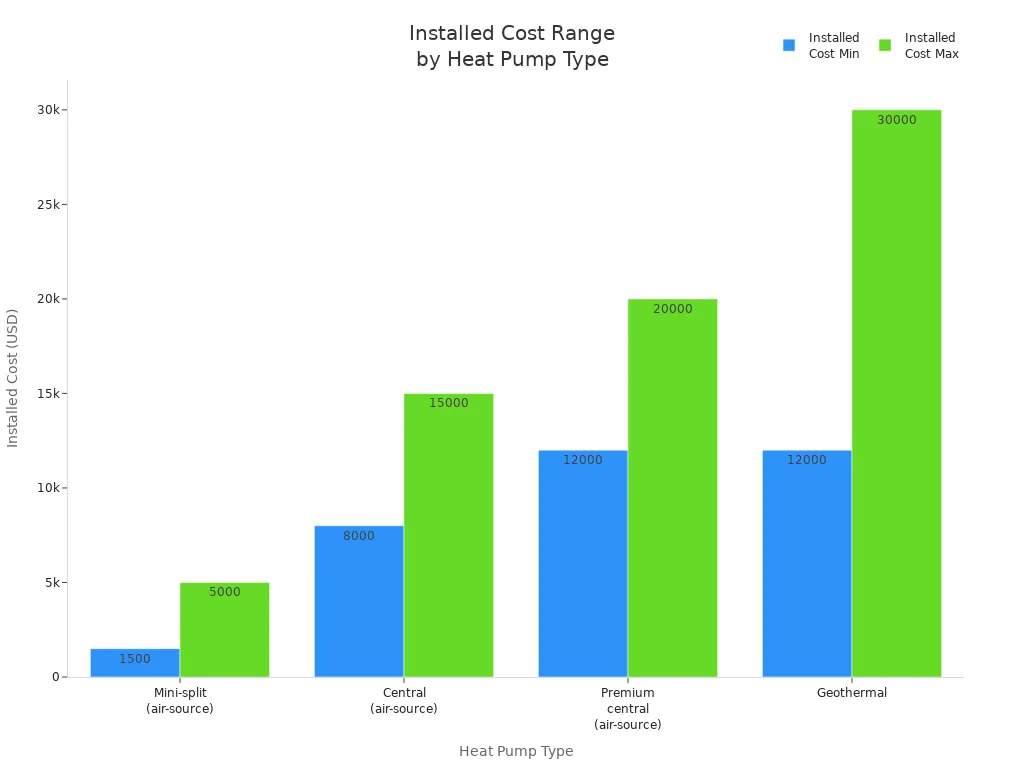
Air-source heat pumps give you a cost-effective way to heat and cool your home. Geothermal systems cost more upfront but can save you money in the long run. Water pumps for home use vary in price, but detailed cost data is less available.
You want a system that’s easy to take care of. Air pumps usually need less maintenance. You just check them regularly, clean the air filters, and sometimes replace the diaphragm. These tasks are simple and don’t take much time.
Water pumps need more attention. You have to inspect them, lubricate moving parts, and replace worn-out pieces. You also need to watch for rust and motor problems. Maintenance for water pumps can take more time and cost more money over the life of the pump.
Air pumps: Simple upkeep, less frequent repairs, lower maintenance costs.
Water pumps: More complex maintenance, higher costs, and more parts to check.
If you want to avoid big repair bills, regular maintenance is key. Air pumps make this easier, while water pumps need a more structured schedule.
You need to choose the pump type that fits your home and your needs. Each type works best in certain situations.
Pump Type | Suitable Home Applications | Key Characteristics and Advantages | Limitations and Notes |
|---|---|---|---|
Submersible Pump | Aquariums, ponds, water tanks, deep wells, water features | Operates submerged in water, quiet, efficient, low maintenance, no priming needed, long operation possible | Needs electrical power, can only pump water to locations higher than the pump itself |
Centrifugal Pump | Irrigation systems (lakes, ponds, shallow wells), boosting water pressure | Installed on dry land, uses centrifugal force, versatile, ideal for dirty water, can pressurize water | Must maintain prime, intermittent operation only, performance affected by high suction lift |
Variable Speed Booster Pumps | Whole house water supply and pressure boosting | Energy efficient, noise reduction, smart control adapting to demand, modern and comfortable solution | Higher initial cost, requires proper sizing and maintenance |
Submersible pumps work great for aquariums, ponds, and deep wells.
Centrifugal pumps are best for irrigation and boosting water pressure.
Variable speed booster pumps are perfect for whole-house water supply and smart homes.
When you pick a pump, think about what you need it to do. Consider flow rate, head height, energy efficiency, and how much noise you can tolerate. The right choice depends on your home and your daily routine.
You might notice your shower feels weak or your washing machine takes forever to fill. These are signs you could benefit from a booster water pump. Here are some common situations where you should consider one:
You live in a multi-story home and the water pressure drops on the upper floors.
Your city water supply doesn’t deliver enough pressure for daily tasks like showering, watering plants, or running appliances.
You rely on a well system that struggles to maintain steady pressure.
You want to improve water flow to specific fixtures, like a rain shower or a garden hose.
You need consistent pressure for multiple appliances running at the same time.
A booster water pump can make a big difference in your comfort. These pumps are compact and quiet, so you can install them near your water main or even close to individual appliances. You’ll enjoy stronger, more reliable water flow throughout your home.
Tip: If you notice low pressure, check for leaks or clogged pipes before installing a booster water pump. Fixing these issues first can save you money and prevent future problems.
To select the right booster water pump, you need to match the pump’s power to your home’s needs. Here’s how you can do it:
Inspect your plumbing for leaks or corrosion before you buy a pump.
Figure out how much water you use at peak times—like mornings when everyone showers.
Measure the height from your water source to the highest fixture. This helps you calculate the pressure boost you need.
Choose between variable speed and fixed speed pumps. Variable speed pumps adjust to your water use, saving energy and lasting longer.
Work with a professional to check the pump’s flow and pressure ratings. Make sure the pump operates in its most efficient range.
Sizing Factor | What to Consider |
|---|---|
Flow Rate | Peak water use during busy times |
Total Dynamic Head | Height and resistance in your plumbing |
Pump Type | Variable speed for efficiency, fixed speed for steady loads |
Installation Location | Easy access for maintenance and safety |
When you install your booster water pump, always turn off the power first. Place the pump on a stable, level surface—using a vibration pad helps keep things quiet. Hand-tighten all pipe connections and check for leaks with a pressure gauge. Prime the pump with water before starting, and open a tap at the highest point to let air escape. After you start the pump, listen for odd noises or vibrations and check for leaks. Adjust the pressure tank as needed, and test the system under different loads to make sure it works well.
Note: Always follow local codes and safety guidelines. If you’re unsure, ask a professional for help with installation and setup.
Choosing between an air pump and a water pump comes down to what you need at home. Air pumps move air for comfort and efficiency, while water pumps handle your water supply and pressure. Your best pick depends on your daily routine, budget, and the features you want.
Think about your home’s needs, pump type, flow rate, and ease of maintenance.
Check expert reviews from JNOD Energy for air pumps and Water Pumps Direct for water pump feedback.
Take your time, weigh your options, and pick the pump that fits your life best.
A surface clean water pump sits above ground and pulls water from a source, like a tank or shallow well. You use it for clean water only. A submersible pump goes underwater and works well for deeper wells or dirty water.
If your shower feels weak or your upstairs faucets barely flow, you probably need a booster water pump. This pump increases water pressure throughout your house, making daily tasks easier and more comfortable.
You can use an electric motor water pump in homes and factories. For home, pick a domestic water pump. For bigger jobs, like factories or farms, choose an industrial water pump. Always match the pump to your needs.
Check your domestic water pump every few months. Clean filters, inspect for leaks, and listen for odd noises. Regular care keeps your water pump running smoothly and helps you avoid costly repairs.
Think about your water needs, the type of water (clean or dirty), and the distance you need to move it. Choose the right size and type, like a surface clean water pump or booster water pump, for the best results.


